Hidden Gems of French Museums: 7 Stunning Collections Beyond the Louvre

Eleanor Whitfield
26 June 2026
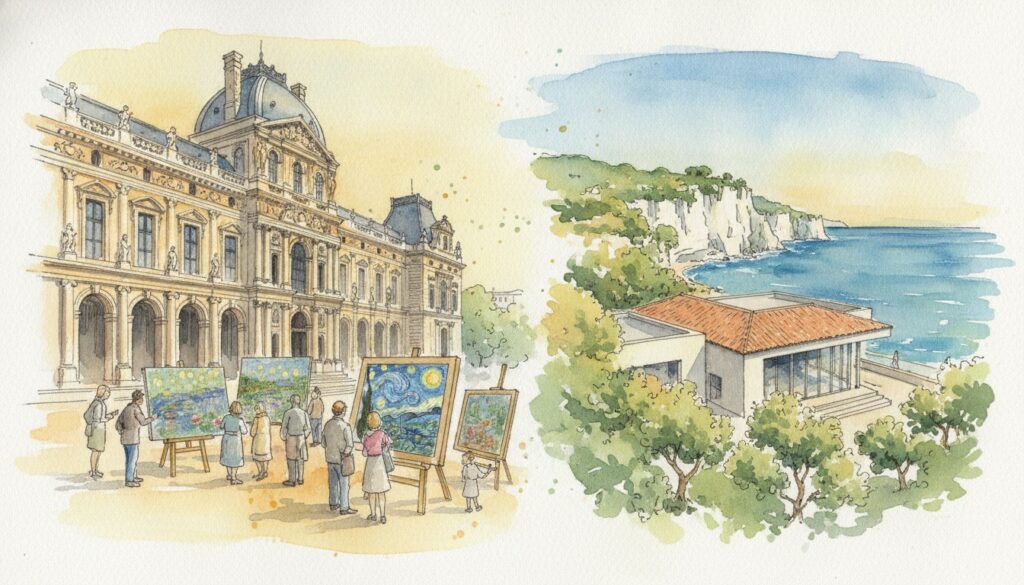
Hidden Gems of French Museums: 7 Stunning Collections Beyond the Louvre
When most travelers think of French museums, the Louvre immediately springs to mind — its iconic glass pyramid, the enigmatic smile of the Mona Lisa, and the sweeping halls filled with centuries of art. But here’s a secret that seasoned culture lovers already know: France is home to over 1,200 museums, and some of the most breathtaking, soul-stirring collections are found far from the Louvre’s crowded corridors.
Whether you’re an art aficionado, a history buff, or simply someone who loves discovering the unexpected, this guide will take you on a journey through seven extraordinary French museums that deserve a spot on your itinerary. From Impressionist masterpieces bathed in natural light to quirky curiosities tucked away in provincial cities, these hidden gems offer unforgettable experiences — often without the long queues.
1. Musée d’Orsay, Paris — The Cathedral of Impressionism
Located inside a magnificent former railway station on the Left Bank of the Seine, the Musée d’Orsay is arguably the world’s greatest repository of Impressionist and Post-Impressionist art. While it’s certainly well-known, many international visitors still skip it in favor of the Louvre, which is a tremendous mistake.
What Makes It Special
The museum houses masterworks by Monet, Renoir, Degas, Cézanne, Van Gogh, and Gauguin, among others. The building itself is a work of art — the soaring Beaux-Arts architecture, the enormous station clock, and the way natural light floods through the glass ceiling create an atmosphere that no other museum can replicate.
Pro Tip: Visit on a Thursday evening when the museum stays open until 9:45 PM. The crowds thin dramatically after 6 PM, and the golden evening light through the glass roof is absolutely magical.
- Must-see works: Van Gogh’s Starry Night Over the Rhône, Renoir’s Bal du moulin de la Galette, and Whistler’s Mother
- Location: 1 Rue de la Légion d’Honneur, 75007 Paris
- Best for: Impressionism lovers, photography enthusiasts, architecture admirers
- Don’t miss: The medieval cloister garden, which is peaceful and photogenic
- Pair it with: A stroll through Colmar’s Petite Venise neighborhood and a glass of local Riesling
- Location: Place Unterlinden, 68000 Colmar
- Best time to visit: Late afternoon, when the setting sun illuminates the concrete lattice in warm golden tones
- Free access: The rooftop terrace and Fort Saint-Jean gardens are free to visit
- Location: 7 Promenade Robert Laffont, 13002 Marseille
- Don’t miss: The stunning view from the museum’s terrace overlooking the river confluence
- Combine with: A visit to Lyon’s famous Vieux Lyon district and a meal at one of the city’s legendary bouchons
- Location: 86 Quai Perrache, 69002 Lyon
- Highlight: La Joie de Vivre (1946), a large painting that captures Picasso’s exuberant mood during his time in Antibes
- Bonus: The sculpture terrace features works by Germaine Richier and Joan Miró set against the azure backdrop of the sea
- Location: Place Mariejol, 06600 Antibes
- Allow: At least 90 minutes to fully appreciate the tapestry and the accompanying exhibitions
- Combine with: A visit to the nearby D-Day beaches and the Bayeux War Cemetery
- Location: 13 bis Rue de Nesmond, 14400 Bayeux
- Getting there: Saint-Paul-de-Vence is about 20 minutes from Nice by car
- Best season: Spring and early autumn, when the gardens are at their most beautiful and the crowds are manageable
- Location: 623 Chemin des Gardettes, 06570 Saint-Paul-de-Vence
- Buy tickets online whenever possible to skip the queues, especially during peak tourist season (June–September)
- Check for free admission days: Many French museums offer free entry on the first Sunday of each month
- Invest in a museum pass: The Paris Museum Pass covers over 50 museums and monuments in and around Paris, offering significant savings and skip-the-line access
- Visit early or late: The first and last hours of opening are almost always the quietest
- Download museum apps: Many French museums now offer excellent free apps with audio guides, maps, and curated tours
- Respect photography rules: Some museums allow photography without flash, while others restrict it in certain galleries. Always check before snapping
2. Musée Unterlinden, Colmar — A Medieval Masterpiece in Alsace
Tucked away in the fairy-tale town of Colmar in Alsace, the Musée Unterlinden is one of France’s most visited museums outside of Paris — and for good reason. Housed in a 13th-century Dominican convent, the museum is home to one of the most powerful works of art ever created: the Isenheim Altarpiece by Matthias Grünewald.
Why You Should Visit
The altarpiece, painted between 1512 and 1516, is a monumental polyptych that depicts the crucifixion with an emotional intensity that leaves visitors speechless. The museum also features works by Martin Schongauer, a superb collection of Rhenish art, and a modern extension designed by the renowned architects Herzog & de Meuron.
Insider Tip: Colmar is also the hometown of Frédéric Auguste Bartholdi, the sculptor of the Statue of Liberty. A small museum dedicated to him is just a short walk away.
3. MuCEM, Marseille — Where the Mediterranean Meets Modern Culture
Opened in 2013 when Marseille was named European Capital of Culture, the Museum of European and Mediterranean Civilisations (Musée des Civilisations de l’Europe et de la Méditerranée) is a stunning architectural achievement and a fascinating cultural institution.
The Experience
Designed by architect Rudy Ricciotti, the building is wrapped in a lattice-like concrete shell that casts mesmerizing shadow patterns throughout the day. Connected to the historic Fort Saint-Jean by a dramatic elevated walkway, the museum offers panoramic views of the Mediterranean, the Vieux-Port, and the distant Frioul Islands.
The collections explore the history, traditions, and contemporary issues of Mediterranean civilizations through rotating exhibitions that are always thought-provoking and beautifully curated.
4. Musée des Confluences, Lyon — Science Meets Spectacle
Perched at the confluence of the Rhône and Saône rivers in Lyon, the Musée des Confluences is impossible to miss. Its deconstructivist architecture — a dramatic cloud of glass and steel designed by the Austrian firm Coop Himmelb(l)au — looks like a spaceship that has just landed at the water’s edge.
What’s Inside
This is not your typical art museum. The Musée des Confluences is a museum of science, anthropology, and natural history that asks big questions: Where do we come from? What are we? What do we do? Where are we going? The permanent collection spans 2.2 million objects, from dinosaur fossils and Egyptian mummies to meteorites and ethnographic artifacts from around the world.
Family Tip: This museum is exceptionally family-friendly, with interactive exhibits and workshops designed for children of all ages. It’s one of the best rainy-day activities in Lyon.
5. Musée Picasso, Antibes — Art on the Riviera
In the sun-drenched coastal town of Antibes on the French Riviera, the Château Grimaldi sits on a rocky promontory overlooking the Mediterranean. In 1946, Pablo Picasso was offered the château as a temporary studio, and during his prolific stay, he created an extraordinary body of work infused with the joy and light of the Mediterranean.
The Collection
Many of those works remain in the château today, forming the core of the Musée Picasso. The collection includes paintings, ceramics, drawings, and tapestries, all displayed in the intimate rooms of a medieval castle with breathtaking sea views from the terrace.
Travel Tip: Antibes is easily accessible by train from Nice (15 minutes) or Cannes (10 minutes), making it a perfect day trip along the Côte d’Azur.
6. Musée de la Tapisserie, Bayeux — The World’s Most Famous Embroidery
Long before the Louvre existed, the story of the Norman Conquest of England in 1066 was being told through one of the most remarkable artifacts in European history: the Bayeux Tapestry. This 70-meter-long embroidered cloth — technically not a tapestry at all — depicts the events leading up to and including the Battle of Hastings in vivid, almost comic-strip-like detail.
Why It Matters
The tapestry is housed in a dedicated museum in the charming Normandy town of Bayeux, which itself was one of the first towns liberated after D-Day. The museum provides an excellent audio guide that walks you through each scene, explaining the historical context, the characters, and the artistic techniques used nearly a thousand years ago.
7. Fondation Maeght, Saint-Paul-de-Vence — A Living Work of Art
Nestled in the hilltop village of Saint-Paul-de-Vence in Provence, the Fondation Maeght is one of Europe’s most important private collections of 20th-century modern art. But what truly sets it apart is the way art and architecture are seamlessly integrated into the surrounding landscape.
The Setting
Designed by Catalan architect Josep Lluís Sert in close collaboration with the artists themselves, the foundation features works by Miró, Chagall, Giacometti, Braque, and Calder displayed both indoors and throughout the pine-shaded gardens. Giacometti’s slender bronze figures stand in a courtyard, Miró’s colorful ceramics adorn a labyrinth, and Calder’s mobiles dance in the Provençal breeze.
Don’t miss: The Giacometti courtyard and the Miró labyrinth — two of the most magical outdoor art spaces in the world.
Practical Tips for Exploring French Museums
Before you set off on your museum adventure, here are some essential tips to make the most of your visits:
Conclusion: France’s Cultural Riches Await
The Louvre will always be magnificent, and it absolutely deserves its place on every traveler’s bucket list. But the true magic of France’s museum landscape lies in its diversity and depth. From the sun-drenched terraces of the Musée Picasso in Antibes to the medieval solemnity of the Bayeux Tapestry, from the cutting-edge architecture of MuCEM in Marseille to the serene gardens of the Fondation Maeght, these seven museums offer experiences that are every bit as rich, moving, and memorable as anything you’ll find beneath the glass pyramid.
By venturing beyond the obvious, you’ll not only discover extraordinary art and history — you’ll also find smaller crowds, more intimate settings, and the kind of serendipitous moments that transform a good trip into an unforgettable one.
Ready to Explore?
Start planning your French museum adventure today! Bookmark this guide, share it with your travel companions, and let us know in the comments which of these hidden gems you’re most excited to visit. If you’ve already been to any of these museums, we’d love to hear about your experience.
Have a favorite French museum that didn’t make the list? Drop it in the comments below — we’re always looking for new discoveries to share with our readers!
Written by Emma Davis | French Museums | Updated 2024