Planning Your Perfect Louvre Visit: Insider Tips, Routes, and Time-Saving Strategies

Eleanor Whitfield
26 June 2026
Planning Your Perfect Louvre Visit: Insider Tips, Routes, and Time-Saving Strategies
With over 380,000 objects spread across 72,735 square meters of gallery space, the Louvre Museum in Paris isn’t just a museum — it’s a universe unto itself. Every year, nearly 10 million visitors walk through its doors, many of them leaving with the nagging feeling that they barely scratched the surface. Some spend hours in line only to catch a distant glimpse of the Mona Lisa before being swept away by the crowd.
But it doesn’t have to be that way.
Whether you’re a first-time visitor hoping to see the highlights or a returning art lover ready to explore hidden corners, this comprehensive guide will help you plan smarter, move faster, and experience more. From choosing the right entrance to mapping out your ideal route, consider this your ultimate insider playbook for conquering the Louvre.
Understanding the Louvre’s Layout: A Quick Orientation
Before diving into strategies, it’s essential to understand the museum’s physical structure. The Louvre is divided into three main wings, each named after prominent French figures:
- Denon Wing — Home to the most famous works, including the Mona Lisa, Winged Victory of Samothrace, and Italian Renaissance masterpieces.
- Sully Wing — Features Egyptian antiquities, the medieval Louvre foundations, and French paintings.
- Richelieu Wing — Houses Northern European paintings, French sculpture courts (the stunning Marly Horses), and Napoleonic apartments.
- Wednesday and Friday evenings are golden. The Louvre stays open until 9:45 PM, and crowds thin dramatically after 6 PM. Evening light filtering through the pyramid is an added bonus.
- Monday and Thursday tend to be moderately busy but manageable, especially in the early morning.
- Avoid Saturdays and Sundays if at all possible — these are peak days, particularly during summer and holiday seasons.
- The museum is closed on Tuesdays, so don’t make that rookie mistake.
- Opening time (9:00 AM): Arrive at least 20–30 minutes early. The first hour offers the best chance to see popular works without heavy crowds.
- Lunchtime (12:30–2:00 PM): A surprising sweet spot. Many tour groups break for lunch, temporarily clearing out major galleries.
- Late afternoon (after 3:00 PM on late-night days): Tour groups have departed, and the atmosphere becomes noticeably calmer.
- Start at the Denon Wing, Ground Floor: Marvel at the Winged Victory of Samothrace at the top of the Daru staircase — one of the most dramatic presentations in any museum worldwide.
- Italian Renaissance Galleries (Denon, 1st Floor): Work your way through masterpieces by Caravaggio, Raphael, and Veronese’s massive Wedding at Cana.
- Mona Lisa (Salle des États, Denon, 1st Floor): Yes, it’s smaller than you expect. Yes, the crowd is intense. But seeing Leonardo da Vinci’s enigmatic portrait in person remains a bucket-list moment. Tip: After viewing the Mona Lisa, turn around — the enormous Wedding at Cana behind you deserves equal attention.
- French Neoclassical Paintings: Don’t miss Jacques-Louis David’s The Coronation of Napoleon and Delacroix’s Liberty Leading the People in nearby galleries.
- Greek Antiquities (Sully, Ground Floor): End with the serene Venus de Milo.
- Egyptian Antiquities (Sully Wing): One of the world’s finest collections, featuring the Great Sphinx of Tanis, royal sarcophagi, and the stunning Seated Scribe.
- Napoleon III Apartments (Richelieu Wing, 1st Floor): Jaw-dropping opulence that rivals Versailles. The grand salon with its crystal chandeliers and gilded ceilings is breathtaking.
- Northern European Paintings (Richelieu, 2nd Floor): Vermeer’s The Lacemaker, Rembrandt self-portraits, and works by Van Eyck.
- Marly and Puget Courtyards (Richelieu, Ground Floor): Glass-roofed sculpture courts bathed in natural light — among the most photogenic spaces in the museum.
- Medieval Louvre Foundations (Sully, Lower Ground Floor): Walk through the original 12th-century fortress walls discovered during excavations. Atmospheric and virtually empty.
- Islamic Art Galleries (Denon, Lower Ground Floor): Opened in 2012 beneath a stunning undulating glass roof, this collection of 18,000 objects is world-class yet overlooked.
- Objets d’Art Collection (Richelieu/Sully, 1st Floor): Crown jewels, medieval ivories, and the legendary Regent Diamond.
- French Paintings of the 17th–18th Century (Sully, 2nd Floor): Georges de La Tour’s candlelit scenes and Chardin’s still lifes in peaceful, uncrowded galleries.
- Comfortable shoes — You’ll walk 3–5 miles minimum. The marble floors are unforgiving.
- A portable phone charger — You’ll be using your phone for maps, photos, and the audio guide app.
- A light jacket or sweater — Gallery temperatures can be cool, especially in lower-level rooms.
- A water bottle — Staying hydrated helps maintain energy and focus.
- Large bags or backpacks over 55 × 35 × 20 cm are prohibited and will need to be checked.
- Selfie sticks are banned inside the museum.
- Tripods and flash photography are not allowed.
- The museum has several cafés and restaurants inside, including Café Mollien (Denon Wing, 1st Floor) with its terrace overlooking the pyramid courtyard — a perfect mid-visit break.
- Benches are placed throughout the galleries. Don’t feel guilty about sitting down to rest and simply absorb the art around you. Some of the best museum moments happen when you stop rushing.
- For a budget-friendly option, exit through the Carrousel du Louvre for quick bites at the food court, then re-enter with your ticket (same-day re-entry is permitted).
- Photography without flash is permitted in most permanent collection galleries.
- Some temporary exhibitions prohibit all photography — watch for signage.
- Be respectful of other visitors. Avoid blocking pathways for extended photo sessions.
- Free admission for visitors under 18 (all nationalities) and EU residents under 26.
- Free admission on the first Saturday evening of each month (6–9:45 PM).
- Free admission on Bastille Day (July 14th).
- The Paris Museum Pass offers excellent value if you’re visiting 3+ museums.
- Teachers, journalists, and art professionals may qualify for free or reduced entry with valid credentials.
- Trying to see everything — This leads to museum fatigue and diminished enjoyment. Be selective.
- Spending all your time on the Mona Lisa — It’s worth seeing, but don’t let it consume your visit at the expense of equally magnificent works.
- Ignoring the Richelieu Wing — Most crowds concentrate in Denon. Richelieu is often blissfully quiet and contains extraordinary art.
- Not checking the closure schedule — Certain rooms close on rotating schedules. Check the Louvre website or app on the morning of your visit to avoid disappointment.
- Forgetting to look up — The Louvre’s ceilings are masterpieces in themselves. Painted ceilings, gilded moldings, and architectural details reward those who raise their gaze.
Pro Tip: Grab a free map at the information desk or download the official Louvre app before your visit. The app includes interactive floor plans, audio guides, and curated tour routes that work offline.
Choosing the Best Time to Visit
Timing is arguably the single most important factor in determining the quality of your Louvre experience. Get it right, and you’ll enjoy relatively peaceful galleries. Get it wrong, and you’ll spend more time navigating crowds than admiring art.
Best Days of the Week
Best Time of Day
Seasonal Considerations
| Season | Crowd Level | Notes |
|——–|————|——-|
| Jan–Mar | Low to Moderate | Best overall period; cold weather keeps casual tourists away |
| Apr–Jun | High | Spring break and early summer bring large groups |
| Jul–Aug | Very High | Peak tourist season; expect long lines |
| Sep–Oct | Moderate | Pleasant weather with manageable crowds |
| Nov–Dec | Low to Moderate | Holiday weeks can spike, but weekdays are calm |
Insider Secret: The first Saturday of each month offers free admission from 6 PM to 9:45 PM. It’s wonderful for budget travelers, but expect significantly larger crowds during this window.
Skipping the Line: Entry Strategies That Actually Work
The infamous Louvre queue can stretch for over an hour during peak times. Here’s how to bypass it like a seasoned Parisian.
1. Buy Tickets Online in Advance
This is non-negotiable. Online ticket holders have a dedicated fast-track entry line at the pyramid. Purchase timed-entry tickets directly from the [official Louvre website](https://www.louvre.fr) to lock in your preferred time slot.
2. Use the Porte des Lions Entrance
Most visitors funnel through the main pyramid entrance. Savvy visitors know about the Porte des Lions entrance on the Seine side of the Denon wing. It’s less crowded, less well-known, and drops you directly into the galleries. Note: This entrance is occasionally closed, so check availability on the day of your visit.
3. Enter Through the Carrousel du Louvre
The underground shopping mall Carrousel du Louvre (accessible from 99 Rue de Rivoli or the Palais Royal–Musée du Louvre metro station) has a direct entrance to the museum. The line here is typically shorter than at the pyramid.
4. Use the Paris Museum Pass
The Paris Museum Pass (available for 2, 4, or 6 days) grants skip-the-line access to the Louvre and over 50 other museums and monuments. If you’re planning to visit multiple attractions, this pass pays for itself quickly.
5. Book a Guided Tour
Many licensed guided tours include priority access. Beyond skipping the line, you benefit from expert commentary that brings the art to life. Look for small-group tours (8–12 people maximum) for the best experience.
Curated Routes: Making the Most of Your Time
Not everyone has the same amount of time or the same interests. Here are three carefully designed routes to match different visit durations.
Route 1: The Essential Highlights (2–3 Hours)
Perfect for first-time visitors or those short on time.
Route 2: The Deep Dive (4–5 Hours)
For art enthusiasts who want to go beyond the greatest hits.
Follow Route 1, then add:
Route 3: The Hidden Gems Tour (3–4 Hours)
For repeat visitors or those who want to escape the crowds entirely.
Time-Saving Strategy: Don’t try to see everything in one visit. The Louvre itself estimates it would take 100 days to see every piece if you spent 30 seconds on each. Choose a route, commit to it, and save the rest for next time.
Practical Tips for a Smooth Experience
Beyond routes and timing, these practical details can make or break your visit.
What to Bring
What NOT to Bring
Eating and Resting
Photography Etiquette
Saving Money: Tickets, Discounts, and Free Admission
Let’s talk budget. A standard adult ticket costs €22 (as of 2024), but there are several ways to reduce or eliminate that cost:
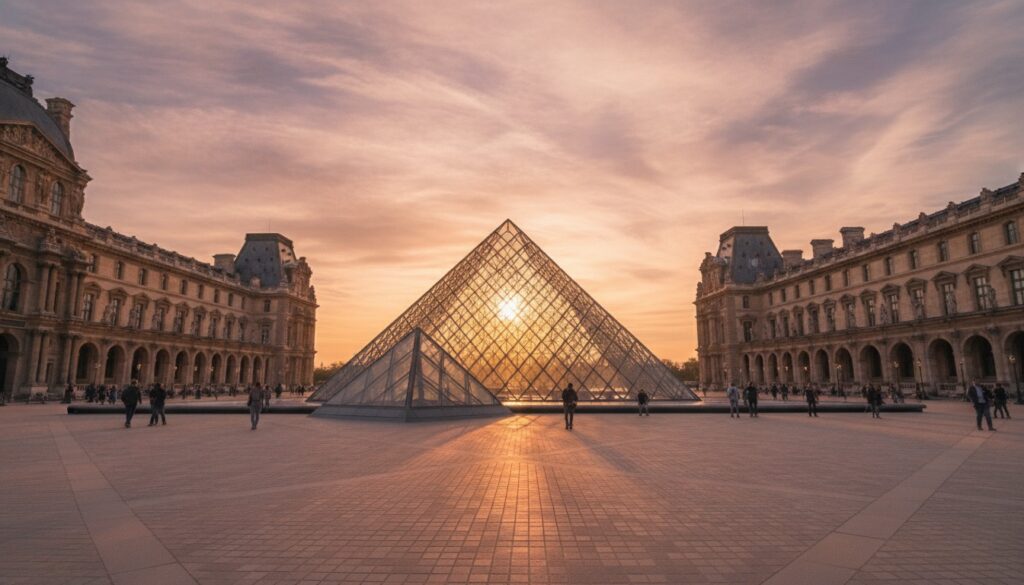
Budget Tip: Even if you don’t enter the museum, the Louvre courtyard and pyramid are free to visit and absolutely stunning at sunset or when illuminated at night. It’s one of the best free photo opportunities in Paris.
Common Mistakes to Avoid
Learn from the millions who came before you:
Conclusion
The Louvre is not a museum you conquer — it’s one you experience, ideally over multiple visits across a lifetime. But with the right preparation, even a single visit can be transformative. By choosing your entry time wisely, selecting the right entrance, following a curated route, and pacing yourself with breaks, you’ll leave the museum feeling enriched rather than exhausted.
Remember: the goal isn’t to see everything. It’s to see what moves you, to stand before works that have inspired humanity for centuries, and to carry those moments with you long after you’ve left the galleries.
Ready to Plan Your Visit?
Start by booking your timed-entry tickets on the official Louvre website, downloading the Louvre app for offline navigation, and bookmarking this guide for reference on the day of your visit. If you found these tips helpful, share this post with fellow travelers who are planning their Paris adventure. Have your own Louvre insider tips? Drop them in the comments below — we’d love to hear from you!
Happy exploring, and may your Louvre visit be everything you’ve dreamed of.