Secrets of the Mona Lisa: What Most Visitors Miss When They Stand Before Her

Eleanor Whitfield
26 June 2026
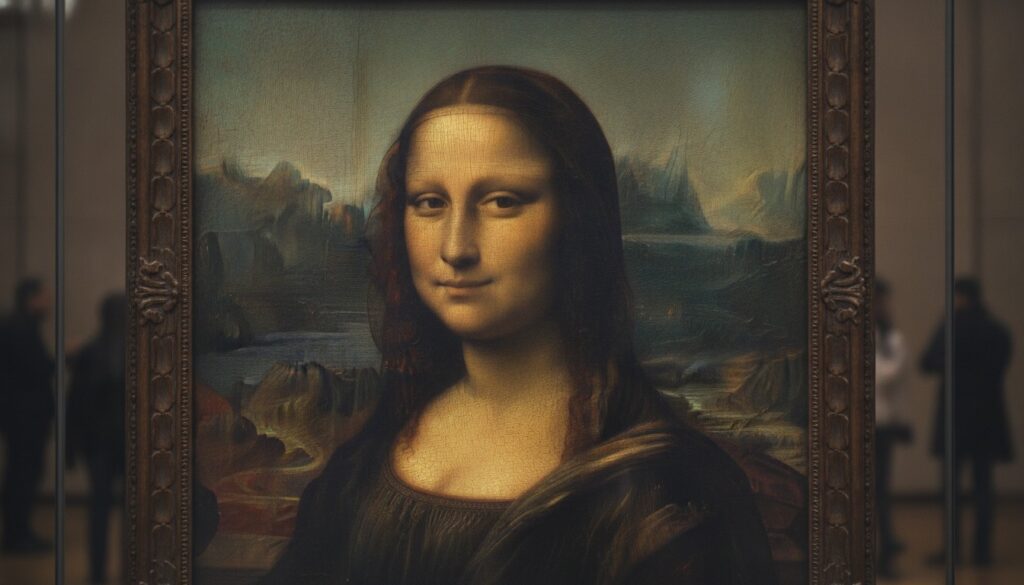
Secrets of the Mona Lisa: What Most Visitors Miss When They Stand Before Her
Every year, approximately 10 million visitors shuffle through the Louvre Museum in Paris, and the vast majority of them have one destination in mind: the Mona Lisa. They navigate the grand corridors, follow the signs, push through the crowd, raise their phones, snap a photo, and walk away. The average time spent in front of Leonardo da Vinci’s masterpiece? A mere 15 seconds.
In those 15 seconds, most visitors miss everything that makes this painting one of the most extraordinary achievements in the history of art. They miss the ghostly landscape that doesn’t quite match on either side. They miss the missing eyebrows. They miss the evidence of Leonardo’s obsessive revisions, the optical illusions built into her smile, and the centuries of drama — theft, vandalism, and conspiracy — that have shaped the painting’s legend.
This post is your guide to truly seeing the Mona Lisa. Whether you’re planning a trip to the Louvre or simply want to understand why a relatively small portrait of an unremarkable Florentine woman became the most famous painting on Earth, read on. You’re about to discover what most people miss.
The Woman Behind the Smile: Who Was Lisa Gherardini?
Before we examine the painting itself, let’s talk about the woman in it. Most art historians now agree that the subject is Lisa Gherardini, the wife of a wealthy Florentine silk merchant named Francesco del Giocondo. This is why the painting is also known as La Gioconda in Italian and La Joconde in French.
Lisa was born in 1479 and married Francesco in 1495, when she was just 15 years old. The portrait was likely commissioned around 1503 to celebrate either the purchase of a new home or the birth of their second son, Andrea.
What Most People Don’t Know
- Lisa Gherardini was not aristocratic or famous during her lifetime. She was a middle-class merchant’s wife — an unusual subject for a painting of this caliber.
- Leonardo likely never delivered the finished portrait to the Giocondo family. He carried it with him for years, continuing to refine it until his death in 1519.
- After Leonardo died in Amboise, France, the painting entered the collection of King Francis I, who reportedly hung it in his bathroom at the Palace of Fontainebleau.
- Foveal vision (central, detail-focused): When you look directly at Mona Lisa’s mouth, you see the fine details — and the smile appears to flatten or even disappear.
- Peripheral vision (surrounding, low-frequency): When you look at her eyes, cheeks, or the background, your peripheral vision picks up the broader shadows around her mouth, and she appears to be smiling more broadly.
- Look directly at her mouth. Notice how the smile seems subtle, almost neutral.
- Shift your gaze to her eyes. The smile appears to widen.
- Look at the background landscape. The smile seems to grow even more pronounced.
- Return to her mouth. It flattens again.
- Fashion of the era: Some historians argue that Florentine women of the early 16th century plucked their eyebrows as a beauty practice.
- Deterioration over time: In 2007, French engineer Pascal Cotte used ultra-high-resolution multispectral imaging to scan the painting. He discovered evidence that Leonardo did originally paint eyebrows and eyelashes, but they were likely removed by overzealous cleaning or restoration over the centuries.
- Sfumato effect: The eyebrows may have been so delicately rendered using Leonardo’s sfumato technique that they simply faded with age.
- The left side features a winding road and a lower horizon line.
- The right side shows a bridge, a body of water, and a noticeably higher horizon line.
- 1956: A visitor threw acid at the painting, damaging the lower portion. Later that same year, a Bolivian man threw a rock at it, chipping paint near her left elbow.
- 1974: While on loan in Tokyo, a woman sprayed it with red paint to protest the museum’s lack of accessibility for disabled visitors.
- 2009: A Russian woman threw a ceramic mug at the painting (the bulletproof glass held).
- 2022: A man disguised as an elderly woman in a wheelchair smeared cake on the glass, claiming it was a climate protest.
- Visit on Wednesday or Friday evenings when the Louvre has extended hours. The crowds thin significantly after 6 PM.
- Arrive early in the morning (before 10 AM) or during lunch hours (12–2 PM) for smaller crowds.
- Avoid Tuesdays — the Louvre is closed, and the surrounding area is still packed with confused tourists.
- Enter through the Porte des Lions entrance (when open) or the Carrousel du Louvre underground entrance to avoid the pyramid line.
- Head to the Mona Lisa first before the main crowds arrive, or last as the museum is closing.
- Spend time with the painting across the hall: Veronese’s Wedding at Cana, a massive, magnificent work that most visitors ignore entirely while facing the Mona Lisa.
- The sfumato technique: Notice how there are no visible brushstrokes or hard outlines anywhere in the painting.
- The hands: They are considered among the most beautifully painted hands in art history — relaxed, luminous, and almost three-dimensional.
- The landscape: Study the impossible, dreamlike terrain behind her. It’s not a real place — it’s Leonardo’s imagination.
- The light: Notice how the light falls on her face from the upper left, creating subtle modeling that gives her skin an almost translucent quality.
- The veil and fabric: The delicate transparency of her veil and the fine pleating of her dress demonstrate Leonardo’s extraordinary technical skill.
- Psychological depth: She appears to be thinking. She has an inner life.
- Atmospheric perspective: The background recedes naturally into haze, mimicking how human eyes actually perceive distance.
- Sfumato: A technique so subtle that even with modern technology, scientists struggle to fully understand how Leonardo achieved it.
- The three-quarter pose with direct gaze: This composition became the standard for portraiture for centuries.
“Leonardo undertook to paint, for Francesco del Giocondo, the portrait of Mona Lisa, his wife; and after toiling over it for four years, he left it unfinished.” — Giorgio Vasari, Lives of the Artists (1550)
Vasari’s account, written decades after the fact, is our primary historical source — and it’s not entirely reliable. Some scholars have questioned whether the painting even depicts Lisa Gherardini at all, proposing alternative subjects ranging from Leonardo’s mother to Leonardo himself in feminine guise. But the Lisa Gherardini identification remains the most widely accepted theory.
The Smile That Changes When You Look at It
The Mona Lisa’s smile is arguably the most analyzed facial expression in history. But here’s what most visitors don’t realize: the smile literally changes depending on where you look.
This isn’t mysticism — it’s neuroscience and artistic technique working together.
The Science of the Enigmatic Smile
Harvard neuroscientist Margaret Livingstone published a groundbreaking study explaining the phenomenon. Human eyes process visual information through two systems:
Try This Next Time You See the Painting
Hidden Details You Can’t See From Behind the Crowd
The Mona Lisa is displayed behind bulletproof glass, roped off at a considerable distance from viewers. This means that many of the painting’s most remarkable details are essentially invisible to the average museum visitor. Here’s what you’re missing.
The Missing Eyebrows and Eyelashes
One of the most frequently asked questions about the Mona Lisa is: why doesn’t she have eyebrows? Several theories exist:
The Asymmetrical Landscape
Look carefully at the background behind Mona Lisa, and you’ll notice something strange: the left and right sides don’t match.
The Veil and the Chair
Many visitors don’t notice that Mona Lisa is wearing a thin, transparent veil over her hair — a guarnello, which was commonly worn by pregnant women or new mothers in Renaissance Florence. This has fueled speculation that the portrait was indeed commissioned to celebrate a birth.
She’s also seated in a chair with a visible armrest, positioned on what appears to be a loggia (an open balcony or gallery). The columns on either side were partially cropped when the painting was trimmed at some point in its history — early copies of the Mona Lisa show wider columns framing the composition.
The Dramatic History: Theft, Vandalism, and Global Fame
Here’s a secret that art historians sometimes whisper: the Mona Lisa was not always the world’s most famous painting. For centuries, it was admired by artists and connoisseurs but was far from a household name. What changed everything was a crime.
The 1911 Theft That Made Her a Superstar
On August 21, 1911, an Italian handyman named Vincenzo Peruggia walked into the Louvre, hid in a closet overnight, removed the Mona Lisa from the wall, tucked it under his coat, and walked out the door.
The painting was missing for over two years. The theft became a global media sensation — front-page news around the world. The Louvre was closed for a week. Suspects included Pablo Picasso and poet Guillaume Apollinaire (both were questioned and released).
Peruggia was eventually caught in 1913 when he tried to sell the painting to an art dealer in Florence. He claimed he had stolen it out of patriotism, believing the Mona Lisa had been looted by Napoleon (it hadn’t — Leonardo himself had brought it to France).
The theft transformed the Mona Lisa from a masterpiece appreciated by the art world into a global cultural icon recognized by virtually everyone on Earth.
Attacks and Close Calls
The painting’s fame has also made it a target:
Controversial Theories and Unsolved Mysteries
The Mona Lisa has inspired centuries of speculation, some scholarly and some wildly imaginative. Here are the most compelling theories that continue to generate debate.
Is It a Self-Portrait?
Some researchers have noted similarities between the Mona Lisa’s face and Leonardo’s self-portrait drawn in red chalk (circa 1512). Digital overlays show intriguing alignments in bone structure. The theory suggests Leonardo painted an idealized, feminized version of himself — a kind of artistic alter ego.
Most mainstream art historians consider this theory unlikely but not impossible.
Hidden Letters and Symbols
In 2010, Italian researcher Silvano Vinceti claimed to have found tiny letters and numbers painted into Mona Lisa’s eyes — an “L” and a “V” in the right eye (Leonardo’s initials?), and the number “72” or the letters “LV” in the left eye. The Louvre has not confirmed these findings, and many experts are skeptical, arguing that the supposed symbols are artifacts of cracking paint.
The Second Mona Lisa
A painting known as the Isleworth Mona Lisa has been claimed by some to be an earlier version painted by Leonardo himself. It depicts a younger-looking woman in a similar pose, with more prominent columns visible on either side. Most experts believe it’s a copy by a student or follower of Leonardo, but the debate continues.
What Lies Beneath
Pascal Cotte’s multispectral scans revealed that beneath the visible surface of the Mona Lisa, there are at least four different compositions — evidence that Leonardo reworked the painting extensively over many years. One underlying image appears to show a woman with a larger head and a different expression. This raises a fascinating question: is the Mona Lisa we see today the portrait Leonardo originally intended, or is it something that evolved into an entirely different work?
How to Actually Appreciate the Mona Lisa at the Louvre
If you’re planning to visit the Louvre, here are practical tips to make your encounter with the Mona Lisa genuinely meaningful rather than a frustrating photo op.
Timing Is Everything
Approach Strategically
What to Look For
Pro tip: Bring a small pair of binoculars or use the zoom on your phone’s camera to study details you can’t see from behind the barrier. But also — put the phone down for at least 60 seconds and simply look.
Why the Mona Lisa Still Matters
It’s fashionable in some circles to dismiss the Mona Lisa as overrated — a victim of its own fame, more meme than masterpiece. But this view misses the point entirely.
The Mona Lisa matters because it represents a revolution in how human beings depict other human beings. Before Leonardo, portraits were largely flat, formal, and symbolic. The Mona Lisa introduced:
Conclusion
The next time you find yourself standing before the Mona Lisa — whether in person at the Louvre or through a high-resolution digital reproduction — resist the urge to snap a quick photo and move on. Instead, take a breath. Look at her eyes. Let your gaze drift to the landscape. Watch her smile appear and disappear. Think about the fact that Leonardo spent years layering translucent glazes thinner than a human hair to create the woman before you.
Think about Vincenzo Peruggia hiding in a closet. Think about the acid and the rocks and the cake. Think about Lisa Gherardini, a merchant’s wife in Florence, who could never have imagined that her portrait would become the most recognized image in human history.
The Mona Lisa rewards patience. Give her more than 15 seconds, and she’ll give you something extraordinary in return.
Share Your Experience
Have you visited the Mona Lisa at the Louvre? Did you notice any of these hidden details, or did the crowds make it impossible to get a good look? Share your experience in the comments below — we’d love to hear your story.
If you enjoyed this deep dive into one of the world’s greatest masterpieces, subscribe to our newsletter for more art history explorations, museum guides, and behind-the-scenes stories that reveal what most people miss. And if you’re planning a trip to Paris, bookmark this post — your future self will thank you.
Written by Sarah Johnson | Art & Masterpieces